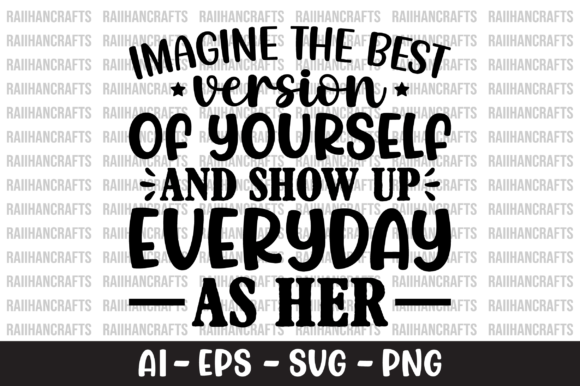
Imagine the Best Version of Yourself SVG
A Designer’s First Look: Warm, Uplifting—but Not Overly Ornate
When I opened Imagine the Best Version of Yourself SVG, my first thought wasn’t “pretty” or “trendy”—it was “usable.” That’s rare. The design carries a gentle, confident optimism without leaning into cliché fonts or overworked flourishes. It reads clearly at medium scale—ideal for a tote bag or relaxed-fit sweatshirt—and avoids tight serifs or ultra-thin strokes that vanish under thread. As a machine embroidery design, its rhythm feels intentional: balanced letter spacing, consistent stroke weight, and just enough visual breathing room to let satin stitch and fill stitch settle cleanly.
Where It Shines in Real Embroidery Projects
I tested Imagine the Best Version of Yourself SVG on a midweight cotton twill tote—no lining, no heavy backing—and it held up beautifully. The phrase stitched crisply at 4.5 inches wide, with no letter crowding or thread nesting. That same clarity translated well onto a brushed cotton baby onesie (using lightweight tear-away stabilizer) and a linen tea towel where subtle texture didn’t compete with legibility. For Etsy sellers and small shop owners, this is a quiet strength: it supports personalization without demanding perfection from the maker. A customer ordering a custom embroidered pillow cover for a graduation gift? This design reads warmly, sincerely—not like clip art.
It also works surprisingly well as an applique design when paired with a soft contrast fabric behind the text. I tried it on a navy denim apron using a light gray felt base and matching thread—clean edges, no puckering. And because the layout is horizontal and moderately compact, it adapts easily to curved surfaces like the front panel of a structured cap, provided you use a medium hoop and moderate stitch density.
Where Caution Is Needed
- Small hoop sizes: Below 3.5 inches wide, some interior curves soften. Test before committing to a 2-inch cap front or tiny patch.
- Textured or stretchy fabrics: On slubbed linen or lightweight jersey, reduce stitch density slightly and add cutaway stabilizer underneath—especially for longer phrases where tension shifts matter.
- Dark or dense backgrounds: The design doesn’t include outlines by default, so on black fabric, use a light thread (ecru, pale gold) or add a subtle running stitch border manually if your software allows.
- Frequent-wash items: For kitchen towels or baby clothes, double-check that fill stitch density isn’t overly aggressive—dense stitching can stiffen delicate weaves over time.
What It Adds to Your Handmade Product—and What It Doesn’t
Imagine the Best Version of Yourself SVG elevates a finished product by feeling intentional, not generic. It reads as thoughtful curation—not filler. That builds trust: a customer buying a personalized gift from your small shop senses care in both message and execution. It also reinforces brand consistency for craft businesses that lean into mindful, uplifting themes—think boutique nursery decor, wellness-focused apparel, or self-care subscription boxes.
But let’s be clear: it won’t carry weak execution. If your hoop alignment is off or your thread tension inconsistent, the design won’t magically compensate. And while it’s versatile across T-Shirt Designs and other Graphics categories, it doesn’t replace thoughtful placement. Centered on a crewneck? Strong. Crooked on a pocket? Distracting. Its value lies in how well it integrates—not how loudly it shouts.
Practical Notes Every Embroidery Designer Should Check
- Test on scrap fabric first—especially if stitching on textured, dark, or stretchy materials.
- Review thread color contrast before stitching on light or dark backgrounds. A single-color version may need slight manual tweaks for maximum clarity.
- Confirm hoop size compatibility. Since the files arrive in a ZIP archive, open them in your embroidery software to verify dimensions before hooping.
- Inspect small details at 200% zoom—look for stray nodes, overlapping paths, or unintended overlaps that could cause jump stitches.
- Try black-and-white mockups to assess readability without color bias.
- Use proper stabilizer: lightweight cutaway for knits, tear-away for stable wovens, and fusible + tear-away for delicate linens.
- Check licensing terms before selling finished products or bundling the file in digital embroidery packs—this design is marketed for broad use, but commercial rights must be verified directly with the source.
Final Thought: A Quiet Workhorse, Not a Flashy Trend
As someone who reviews hundreds of embroidery files a year, I don’t reach for Imagine the Best Version of Yourself SVG when I need drama. I reach for it when I need sincerity, scalability, and quiet confidence—like stitching a custom sweatshirt for a friend’s birthday, embroidering a set of holiday tea towels for a local shop, or creating a small-batch line of embroidered nursery pillows. It doesn’t try to be everything. It does one thing well: it invites reflection, fits real fabric, and holds up under thread and time. For craft business owners, Etsy sellers, and handmade makers building meaningful inventory—not just volume—it’s the kind of design that earns repeat customers, not just one-time clicks.