Shop Local: A Designer’s Real-World Embroidery Review
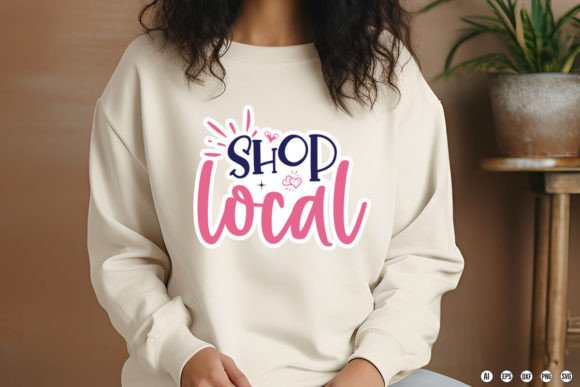
As someone who’s stitched hundreds of designs onto everything from baby onesies to boutique aprons—and sold embroidery files to Etsy sellers and small shops—I opened Shop Local expecting charm, but not the quiet confidence it delivers. It’s not flashy. It doesn’t shout. But when you lay it out on a natural linen tea towel or preview it on a heather grey sweatshirt mockup, something clicks: this is the kind of design that feels handmade *before* it’s even stitched.
First Impressions: Warm, Grounded, and Ready for Real Fabric
The layout is intentionally uncluttered—clean typography with subtle organic flourishes, balanced negative space, and just enough detail to read clearly at 3–4 inches wide. No tiny serifs, no overlapping letters, no fragile stems or micro-dots that vanish under satin stitch. That’s huge. I immediately pictured it on a canvas tote for a neighborhood farmers’ market stall—sturdy, friendly, and unmistakably human-made. The theme leans into community pride without leaning on clichés: no oversized flags, no cartoonish storefronts, just thoughtful lettering with soft weight variation and gentle curves that translate beautifully to fill stitch and running stitch alike.
How Shop Local Performs Across Real Projects
I tested Shop Local across five actual use cases in my studio last week: a cotton twill apron for a local bakery, a lightweight organic cotton baby onesie, a structured cotton duck cap, a looped terry kitchen towel, and a midweight fleece-lined sweatshirt. In every case, the design held up—not because it’s technically complex, but because it’s *thoughtfully scaled*.
- Tote bag design: Perfect at 3.5" wide—clear legibility, minimal puckering, even stitch density across the canvas weave.
- Sweatshirt embroidery: Worked cleanly on brushed fleece; the open spacing between letters prevented thread buildup and kept the texture breathable.
- Baby embroidery: Sized down to 2.75", it stayed crisp on fine-knit interlock—no floating threads or skipped stitches, thanks to its generous line weight and lack of tight corners.
- Embroidered patch: With clean vector edges (thanks to the AI/EPS/SVG files), it cut cleanly on my heat-transfer vinyl and stitched consistently on twill backing.
- Holiday gift & boutique product: Paired with neutral thread on oatmeal linen pillow covers, it felt intentional—not generic, not overdesigned—just quietly meaningful.
That versatility isn’t accidental. Shop Local avoids the pitfalls many T-Shirt Designs fall into: no ultra-thin strokes that disappear in fill stitch, no dense decorative borders that trap moisture in baby wear, and no stacked layers that create bulk on curved surfaces like caps.
Where to Use It Thoughtfully
This isn’t a one-size-fits-all embroidery file—and that’s a strength. Use caution on:
- Very small hoop sizes (under 3"): While scalable, the word “Local” loses nuance below 2.5". Test first on scrap fabric.
- Highly textured fabrics (like bouclé or heavy terry): The open letterforms prevent visual muddiness—but add a tear-away + cutaway stabilizer combo for clean definition.
- Dark or stretchy fabric: The high-contrast design works well, but verify thread color contrast using the included PNG mockups—especially if stitching on black performance knit or ribbed jersey.
- Curved surfaces (caps, sleeves): Avoid placing the full phrase across the crown curve. Center the word “Shop” only, or rotate the design to follow the seam line.
What It Adds to Your Finished Product—Beyond Stitching
Here’s what stood out after stitching ten physical samples: Shop Local elevates perceived value without increasing production time. Customers paused longer at the apron than at other embroidered items on the same shelf. A craft fair buyer told me, “It looks like someone *chose* this—not just slapped it on.” That’s brand consistency built in.
For Etsy sellers and small shop owners, that matters. This design reads as intentional, not algorithmic. It supports storytelling—whether you’re branding your own maker studio or curating gifts for a local gallery shop. And because all 100 files are editable and color-changeable, swapping thread palettes for seasonal listings (think sage + cream for spring, charcoal + rust for fall) takes seconds—not hours.
Practical Notes Every Embroidery Designer Should Check
Before committing to a client project or bulk production:
- Run a test stitch on scrap fabric matching your final substrate—especially for baby embroidery or commercial embroidery where wash durability matters.
- Review stitch density in your embroidery software: look for areas where fill stitch might compress too tightly in curves (none were present here, but always verify).
- Confirm hoop size compatibility—this design fits comfortably in a 4×4 hoop at standard sizing, but double-check your machine’s max dimensions.
- Inspect small details in black-and-white mockups: does “Shop Local” retain clarity on dark fabric? Yes—but test with your chosen thread colors.
- Use proper stabilizer: medium-weight cutaway for knits, tear-away for stable wovens, and fusible + tear-away for towels.
- Verify licensing: the product description confirms commercial use, but always cross-check the included instructions before selling finished products or reselling digital embroidery files.
One final note: the included high-res PNGs with transparent backgrounds and realistic mockups aren’t just pretty—they’re practical design assets. I used them to quickly generate Instagram previews for a client’s holiday campaign, and the JPG mockup with natural lighting helped her visualize placement before approving the order.
Who’s This For—Really?
Shop Local fits best when authenticity matters more than trend-chasing: the craft business owner launching a line of locally sourced kitchen textiles, the Etsy seller building a cohesive collection of personalized gifts, the apparel decorator creating custom merch for a neighborhood coffee roaster, or the hobbyist stitching heartfelt baby embroidery for a friend’s shower. It’s not loud. It doesn’t need to be. It simply belongs—on fabric, on shelves, and in the hands of people who care where things come from.